
Basic guide to TV and radio aerials
Section 1: TV aerials
All TV transmission in the UK is in the UHF band, so these are all UHF aerials.
We have not tested every type of aerial of every make, so comments refer to generic aerial types, not to specific aerials, which are shown in illustrations merely as examples of the type. Aerial design continues to evolve so if any manufacturer feels that they have a product that defies our commentary we’d love to know about it.
References to numbers of elements is based on the original convention [LINK to Articles and information\element count] where an aerial with one reflector assembly, one dipole, and 16 directors is an ‘18 element’.
High quality 10 and 18 element aerials
The workhorse of TV reception since UHF transmissions started in the 1960s, the straightforward ten and eighteen element [LINK to Articles and information\element count] aerial still has a place. The 18-element is the optimum size for the yagi [LINK to Articles and information\yagi] design because adding further elements has very little effect. These aerials are best suited to non-wideband use because the yagi is fundamentally a bandwidth-restricted design, so if the channels you wish to receive are spread right across the band a yagi aerial is not for you. If your channels are all within the same Channel group, [LINK to Articles and information\channel groups] however, a ten- or eighteen element yagi could be your best choice, having excellent sensitivity and directional properties. These aerials have moderate wind resistance, especially when used for horizontal polarisation.
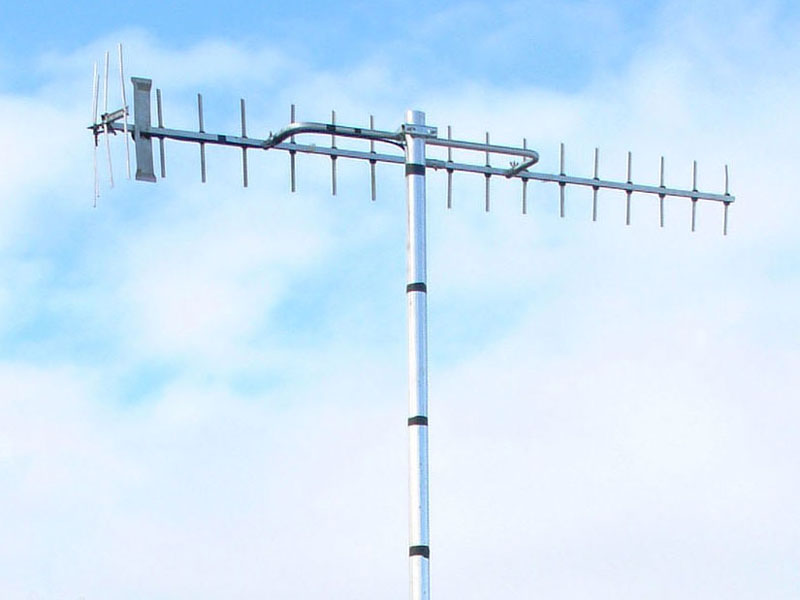
Vertically polarised [LINK to Articles and information\polarisation]18 element aerial.
CLICK to enlarge image
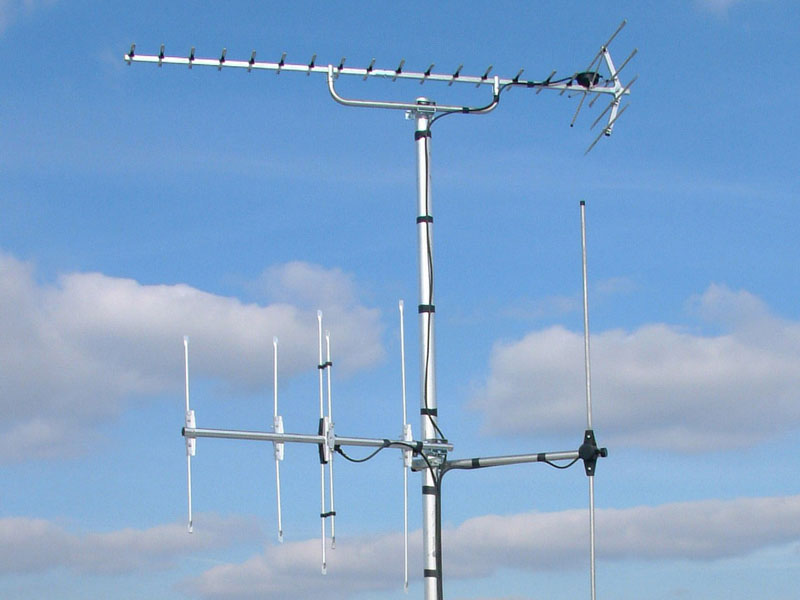
At the top of the mast, a horizontally polarised [LINK to Articles and information\polarisation]18 element aerial.
CLICK to enlarge image
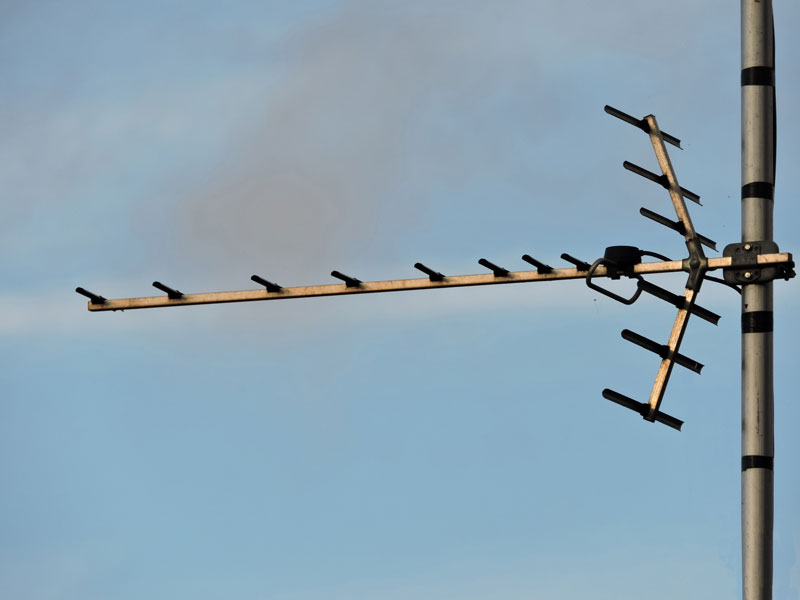
A horizontally polarised ten-element yagi.
CLICK to enlarge image
Low quality 10 and 18 element aerials
Sometimes called ‘contract quality’ these products are much cheaper than the branded equivalents. They are often characterised by the flat plate reflector. Build quality is often poor. These are nominally yagi aerials but the tuning and design is unlikely to be optimal, and the lack of a balun [LINK to Articles and information\balun] or a carefully designed dipole means signal transfer to the cable will be inefficient.

End-mounted 18 element aerials like this tend to be blown round by the wind.
CLICK to enlarge image

A centre-mounted 18 element ‘contract quality’ aerial.
CLICK to enlarge image
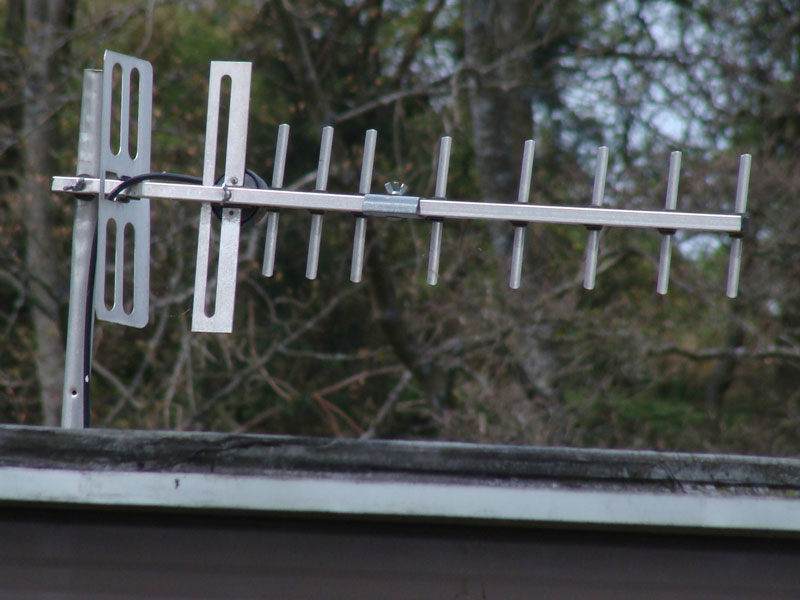
A 10 element wideband ‘contract quality’ aerial.
CLICK to enlarge image
The log-periodic
Detailed information [LINK to Articles and information\log periodic]
Working to a design quite unlike any other type of domestic aerial the strangely-named log-periodic (henceforth to be called the ‘log’ is becoming very popular. The reasons are that it is wideband, so will work on any UK TV channel, it has very useful directional characteristics, it is light so is less expensive to mount high up, and it has very little wind resistance when used for horizontal polarisation. There has to be a snag, and here it is: the gain, or sensitivity, of a log-periodic is significantly less than that of a similarly-sized yagi. However, the directional characteristics mean that the output is likely to be very ‘clean’ (not much unwanted signal and noise) so if wanted signal levels are low a masthead amplifier (a low-gain one normally) can often effectively compensate for the relative insensitivity of the aerial. ( I should mention that this is heresy to some because in simple theory no amplifier can make up for a poor aerial signal, but it’s more complicated than that because it’s all about signal to noise ratios. This is no place to start that discussion.)
The very short logs have significantly lower gain (sensitivity) than the longer versions and lack the latter’s excellent directional properties, especially below channel 28. So what use are they? Well, they are cheap, and they have very low wind resistance, and they are unobtrusive. They’re OK when there’s a strong signal available. Better than a set-top aerial, so ideal if used with a masthead amplifier and hung up in the window of your student digs when there isn’t a proper communal TV system. Also useful for clipping to your truck’s wing mirror when you’re taking your break.

A very short log periodic
CLICK to enlarge image

A horizontally polarised log periodic
CLICK to enlarge image

A vertically polarised log periodic
CLICK to enlarge image
Medium sized multi-element aerials
If you imagine building a conventional yagi, starting with a dipole and reflector and putting more and more directors [all three of these underlined words are a LINK to Articles and information\naming of parts] elements along the boom and watching how each one improves the gain of the aerial, a point would be reached, at about the twentieth director, where any improvement was unmeasurably small. How then to get more gain from the yagi? The answer, if it is an answer, is to put a number of directors — usually four — together at the same position on the boom to form a ‘bay’. The basic shape and size of a director — which is that it is a bit less than half a wavelength long, is straight, and is in the same plane as the received signal — has been largely disregarded, so there are aerials on the market with a wide variety of quite weird looking elements. (Some years ago there was an aerial known in the trade as ‘the swastika’.)
In general these multi-element aerials do what it says on the tin, just about. They will normally have 1dB or so better gain than a conventional 18 element yagi of comparable length. They tend to have better gain near the top of the band than the bottom, so if high channels are in use and it’s a weak signal area they are likely to be a better bet than the obvious alternative, a log periodic. They are however much heavier and catch the wind more than either a log or a conventional 18 element, so the advantage of the extra gain might be lost if the aerial can’t be mounted as high.
The difficulty in designing an aerial of reasonable size and weight that will better the standard yagi is that the said standard yagi sets the bar very high. It is remarkably efficient in terms of size, weight, and windage versus gain and directivity. See mV per kilo [LINK to Articles and information\mV per kilo]

A multi-element aerial centre-mounted with a support arm or ‘cradle’.
CLICK to enlarge image
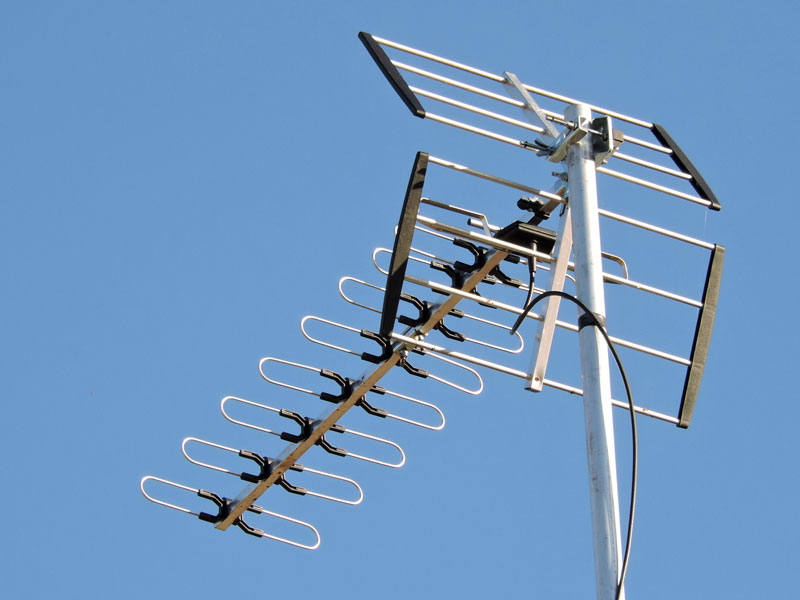
An end-mounted example with slipshod cable fixing.
CLICK to enlarge image
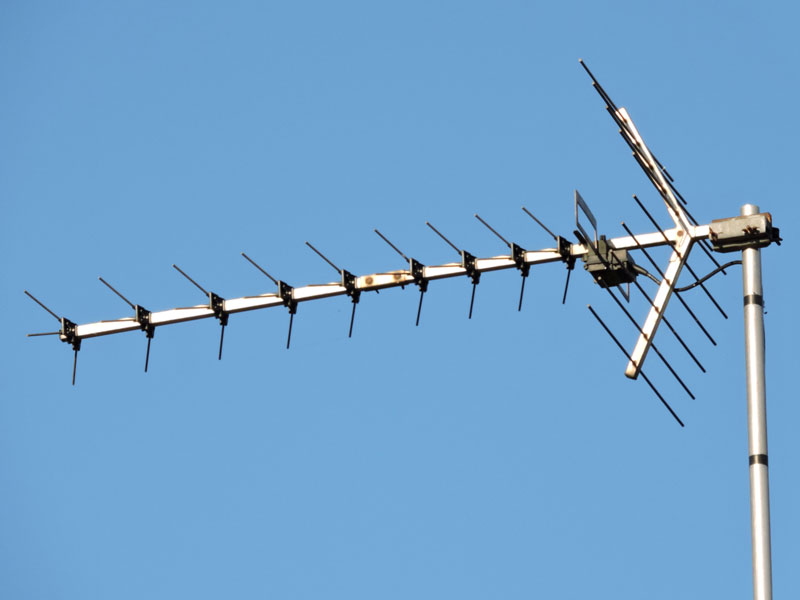
Note the differing designs of the elements in these three examples.
CLICK to enlarge image
Large multi-element aerials
These aerials are the result when a manufacturer sets out to produce something with the absolute best possible gain but at a size and weight that can reasonably be fixed onto a 2″ diameter mast. They can be up to 2.5m long and will have around sixteen bays of four directors. The gain will be 0.6 to 1dB more than the medium-sized version. The beamwidth of these aerials is quite narrow at about 13°, so careful alignment and a secure fixing are essential. You would always use a masthead amplifier with an aerial of this size.

Horizontally polarised high gain aerial
CLICK to enlarge image
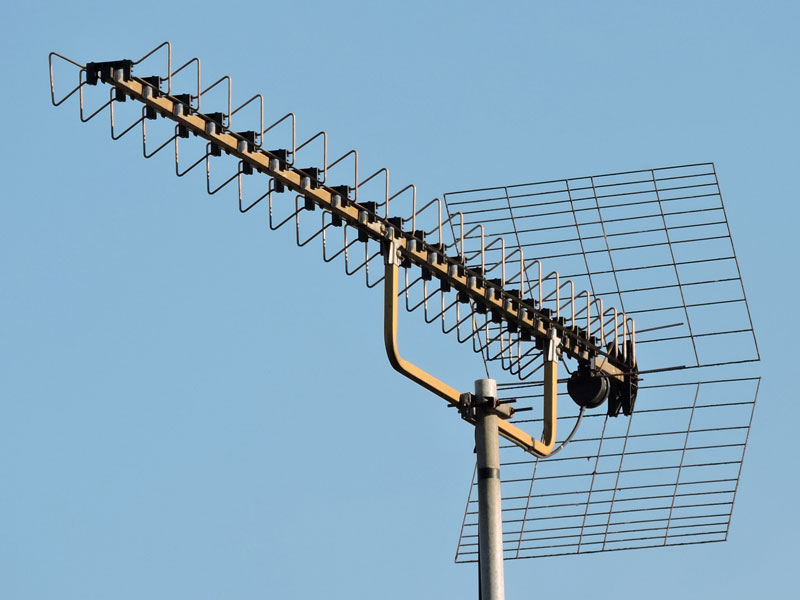
Horizontally polarised high gain aerial
CLICK to enlarge image
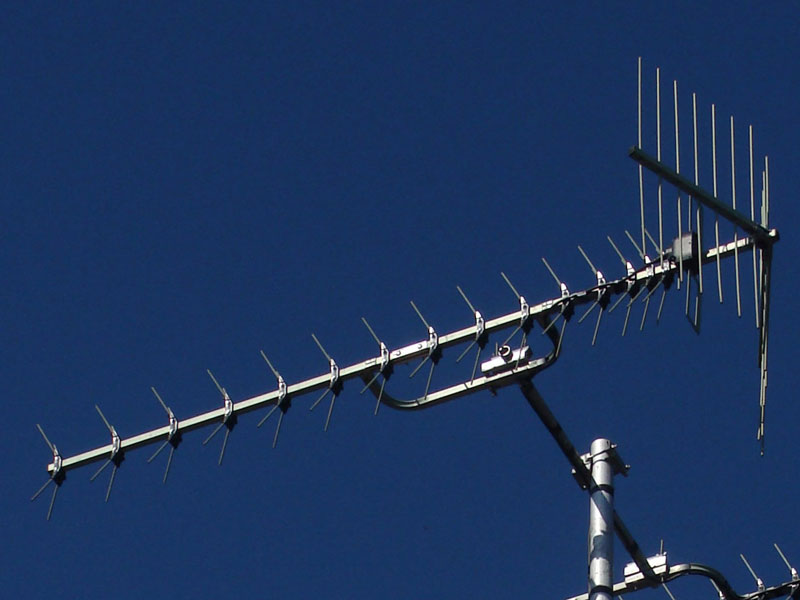
Vertically polarised high gain aerial, one of a pair
CLICK to enlarge image
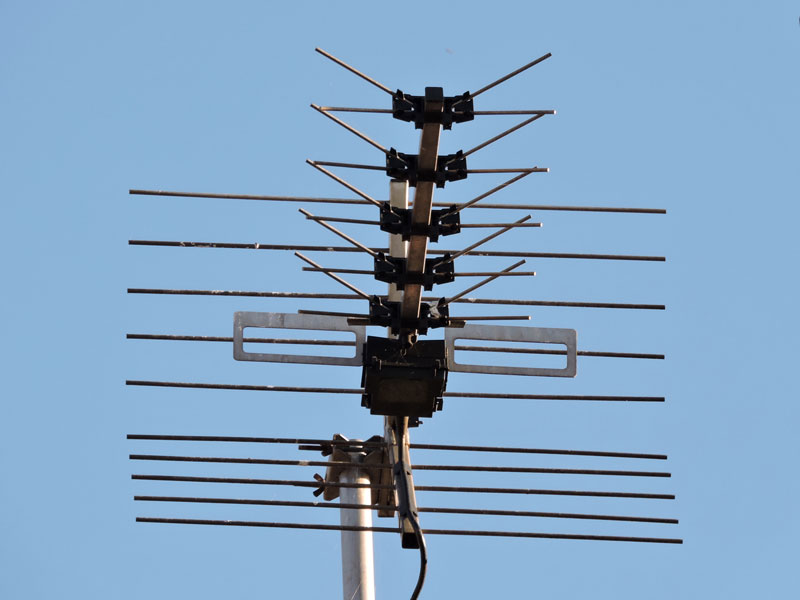
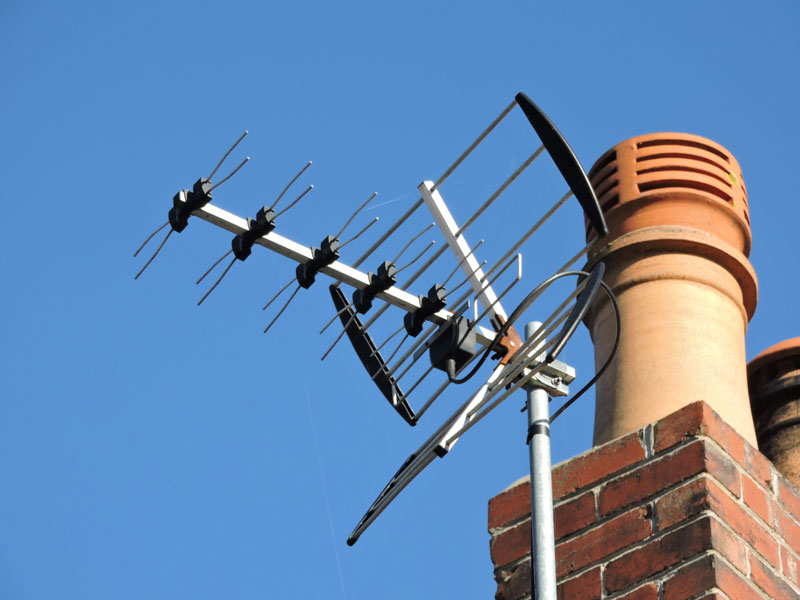
The very stubby little multi-element things
What else can I call them? They are essentially just a cut-down version of the longer multi-element types. Always end-mounted, always wideband, they have an over-large reflector assembly, a full-wave dipole, but usually only about five sets of directors. It’s as if they want to bask in the glory of their big brothers, but can’t quite hack it. Cynically I wonder if they sell merely because they look more expensive than a conventional yagi or a log-periodic. Like all wideband yagis the gain and directivity tends to be especially poor on the lower channels, and with these aerials performance isn’t too clever higher up the band either, because of the small number of directors. Gain-wise they are roughly equal to a conventional ten element. Even as a caravan aerial they are a poor choice because they don’t transport easily.
CLICK to enlarge image
CLICK to enlarge image
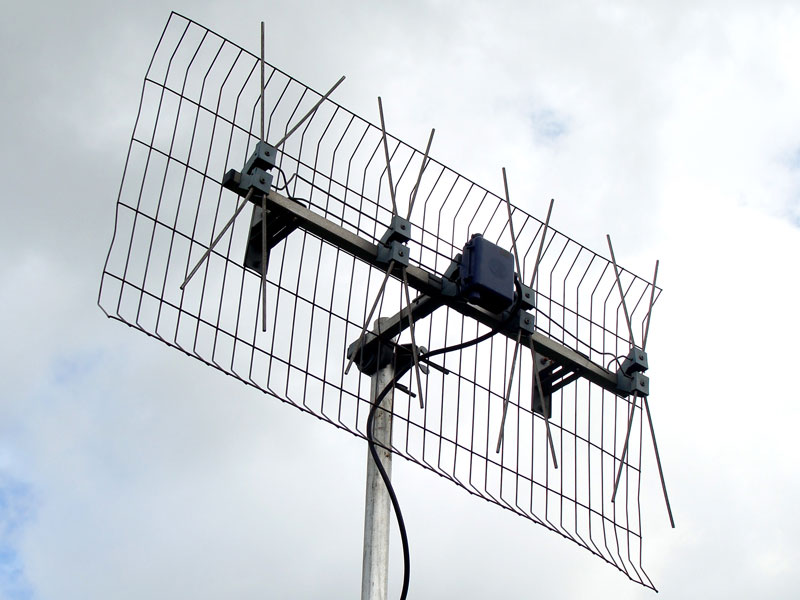
Billboards or Grid aerials
These aerials were very popular in the UK a few years ago, but less so now. They are inherently wideband, although most types have gain fall-off at one or both ends of the band. They have two, or more commonly four active elements, usually full wave dipoles, mounted in front of a large reflector. Methods of combining the outputs of the dipoles correctly and matching the aggregated signal to the feeder cable vary. Directional characteristics vary widely across the band, being generally poor when the aerial is horizontally polarised but better when it is vertically polarised. The gain is not quite in the same ballpark as a conventional ten element aerial and tends to be rather uneven because of phasing issues.
CLICK to enlarge image

CLICK to enlarge image
Section 2: VHF FM aerials
With very few exceptions VHF-FM radio transmissions in the UK are either vertically polarised or use mixed polarisation. There is therefore little point in mounting an aerial horizontally unless one or more of the following applies:
- It’s necessary to reject strong unwanted vertically polarised signals
- Reception is only needed from a mixed polarisation transmitter and mounting the aerial is easier if it is horizontal (this also avoids the supporting mast acting as an unwanted parasitic element.)
- Where the ability of a horizontally polarised yagi to reject signals from the sides is useful.
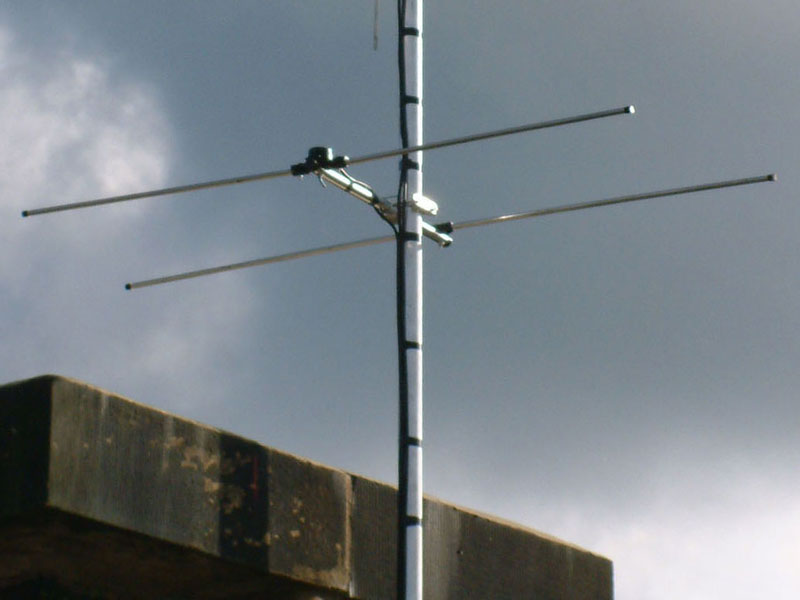
A horizontally polarised two element FM aerial
CLICK to enlarge image
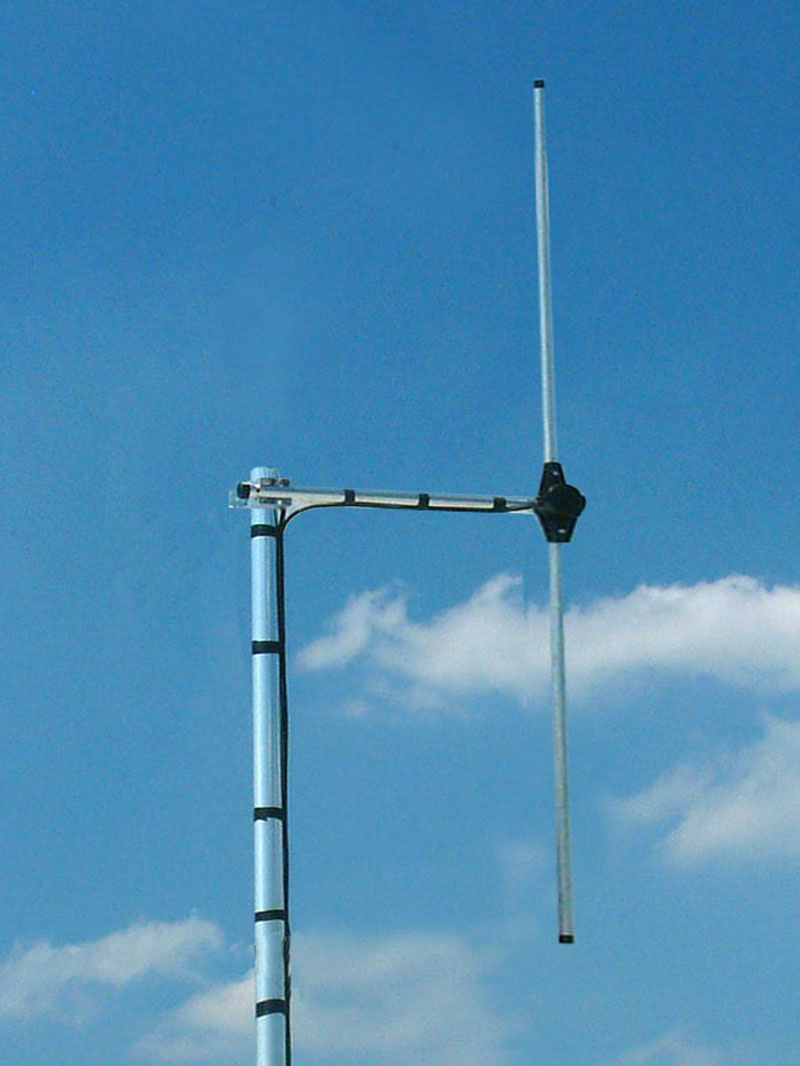
A vertically polarised FM dipole
CLICK to enlarge image

A vertically polarised FM dipole will acquire some directional performance if mounted a quarter of a wavelength away from a mast.
CLICK to enlarge image

A vertical dipole for all-round reception and a six-element yagi for reception of a distant station. On a cold day by the looks of it.
CLICK to enlarge image

This is a ‘halo’. It’s designed for omnidirectional (all-round) horizontally polarised reception, and as such is completely pointless in the UK (see the introduction to this section.) The gain of a halo is about 4dB less that a dipole, and it won’t receive any of the vertical-only transmissions.
CLICK to enlarge image

Another damn-fool marketing man’s idea. Bah!
CLICK to enlarge image
Section 3: DAB aerials
All DAB (digital radio) transmissions are vertically polarised, but looking at the rooftops a lot of installers seem to be unaware of this basic fact. DAB was designed for reception in vehicles and by portables using a whip aerial, so it is largely immune to multipath (reflected signals.) Signal levels are generally very good outdoors, especially on the rooftop. DAB transmissions for any particular area are not necessarily co-sited. These factors conspire together to suggest that a simple vertical dipole, (which isn’t directional) is all that’s necessary or desirable in most cases. However, in remote areas where reception is possible from only one transmission site and where even those signals are weak, a directional aerial with a bit of extra gain compared to a dipole would be the thing to use.

A DAB dipole. This is a folded dipole with a matching device in the junction box.
CLICK to enlarge image
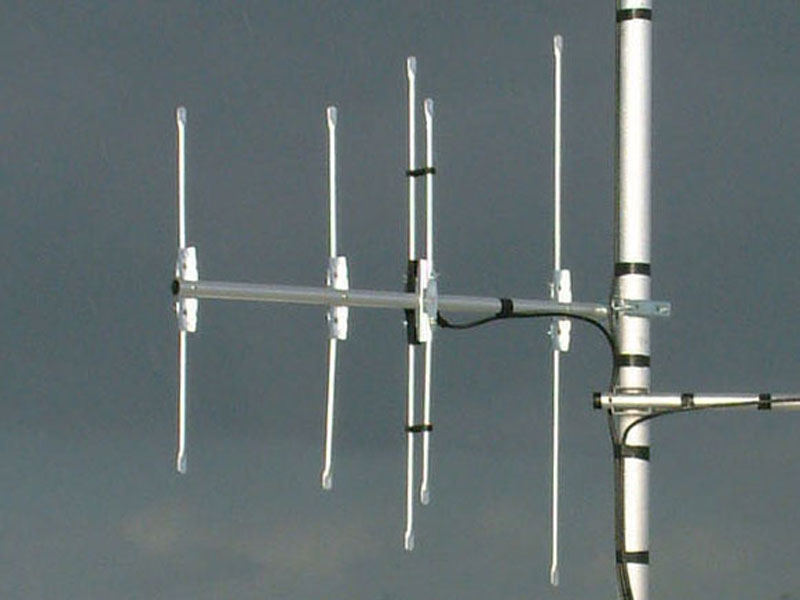
A four-element DAB aerial. These aerials are directional, but with only four elements and the need for wideband coverage (the DAB band is quite wide) they don’t have much gain over a dipole.
CLICK to enlarge image
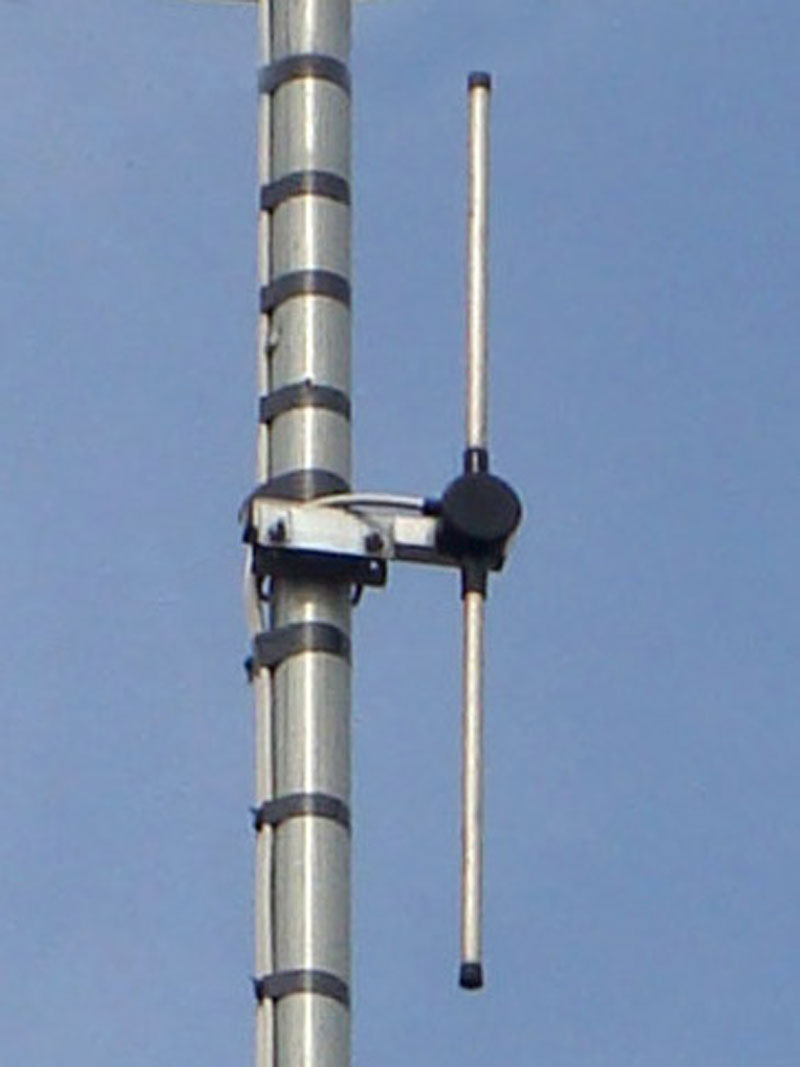
A non-folded DAB dipole. This one is mounted too close to the mast so it will be de-tuned and will have unpredictable directional characteristics.
CLICK to enlarge image